
The Silence Factory: What the Soviet Purges Did to Writers
It changed the Russian literary landscape forever.

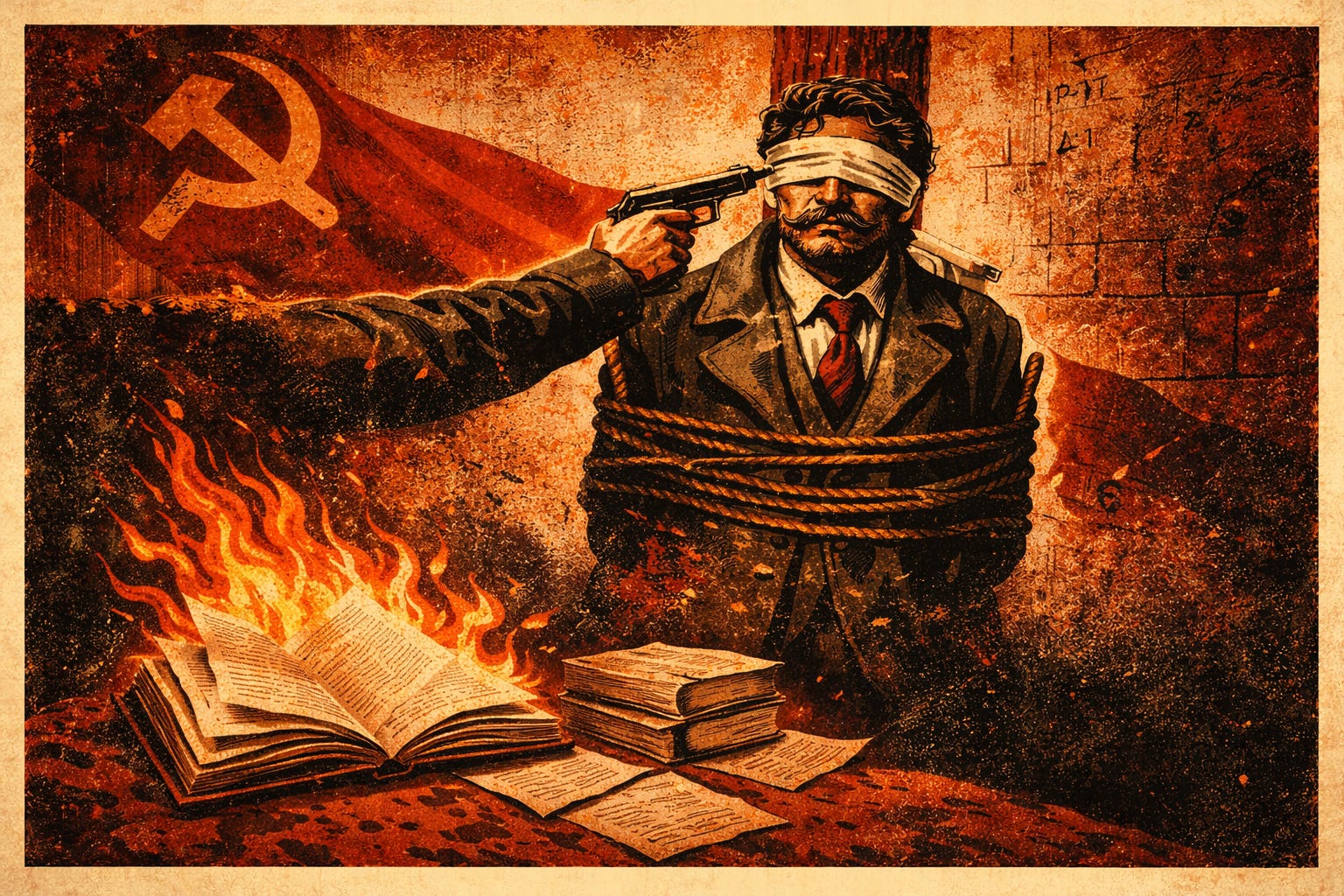
At some point in the Soviet Union, writing stopped being a profession and started becoming a gamble with your life.
Not in the abstract, tortured-artist sense or the “suffering for your craft” nonsense people like to romanticise. I mean quite literally – sit down, write the wrong sentence, and you could end up dead. Or worse – forgotten.
Soviet repression wasn’t just about killing people. It was about controlling reality itself. And writers – those inconvenient little creatures who insist on describing things as they are – were standing directly in the way of that project.
So the regime didn’t merely punish them. It re-engineered them and in doing so, it built something far more dangerous than censorship. It built a culture where truth became optional.
When Language Becomes a Weapon
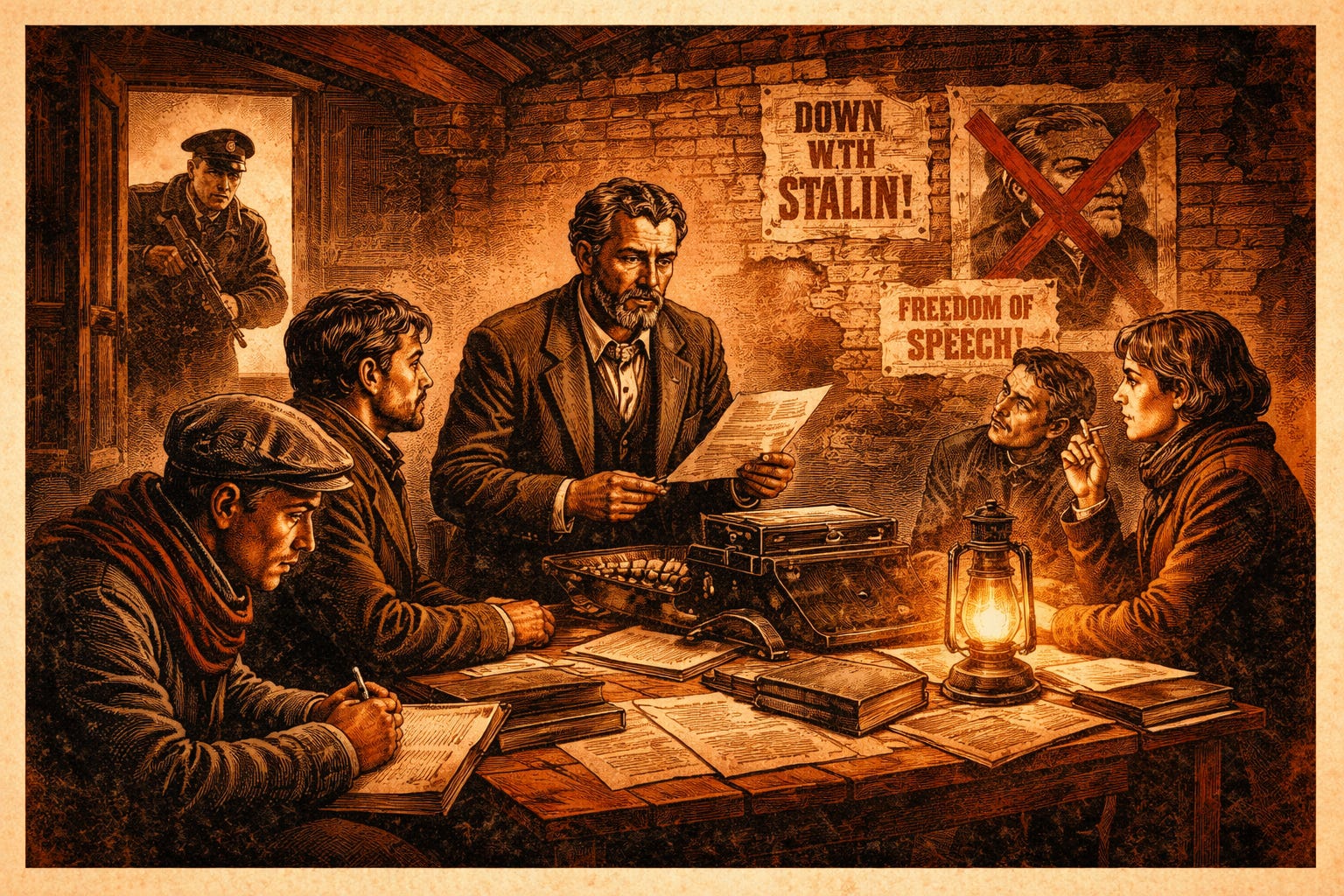
Under Joseph Stalin, language wasn’t just communication. It was infrastructure. It held the system together. If the words worked, the illusion held. If the illusion held, the system survived.
Which meant words had to be ruthlessly controlled. You didn’t just avoid criticism of the state. You avoided ambiguity and doubt. Anything that might be interpreted as deviation. Language itself was stripped down and rebuilt into something blunt, predictable, and obedient. Writers were expected to operate inside that cage as if it were perfectly normal.
Think about that for a second. Imagine being told not only what you’re allowed to say, but how you’re allowed to think about saying it. Not just content control, but cognitive control. This wasn’t censorship. This was linguistic engineering.
The Purge as a Creative Reset
The Great Purge didn’t just eliminate people. It wiped the slate clean, and that was the point.
You get rid of the old guard—the independent thinkers, the critics, the ones who still remember what writing looked like before the rules—and you replace them with something more compliant. It wasn’t chaos. It was a reset.
By removing entire circles of writers, editors, critics, and publishers, the regime wasn’t just silencing dissent. It was dismantling the ecosystem that allowed dissent to exist in the first place. No rival schools of thought or competing standards of quality. Just a single, centralised idea of what literature should be.
If that sounds familiar, it should. Because it’s the same logic used in any system that wants to control culture. You don’t argue with opposition. You eliminate the conditions that allow opposition to form. The Soviet Union just happened to do it with a particular flair for violence.
The Rise of the “Official Imagination”
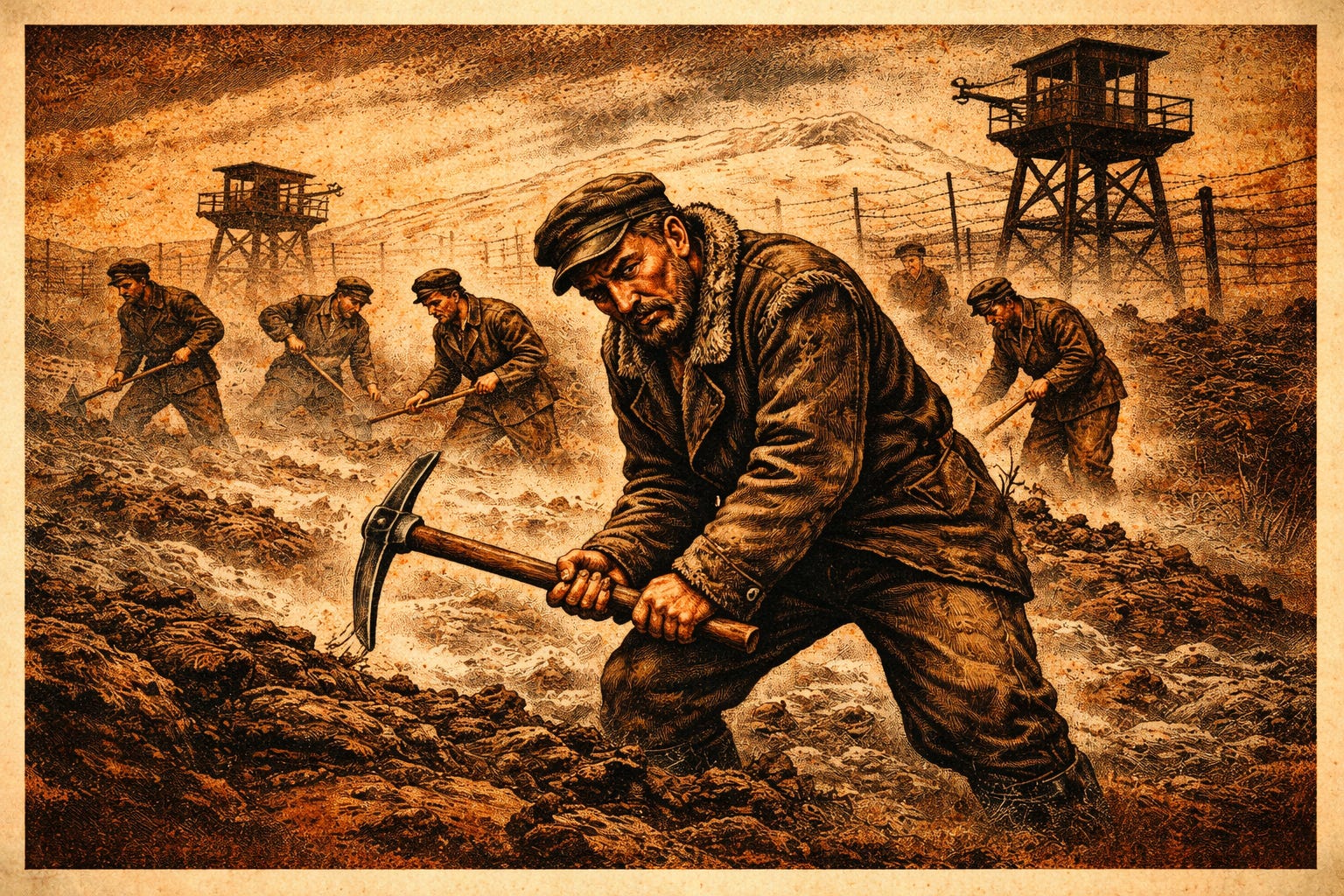
When you force writers into a system where they must produce ideologically approved work, you don’t kill imagination outright. You redirect it. Instead of asking, “What’s true?” writers start asking, “What’s acceptable?” Instead of exploring reality, they construct it.
They build narratives that align with state expectations. Stories where outcomes are predetermined. Characters who exist not as people, but as examples. Conflicts that resolve in ways that reinforce the system.
This is what I call the “official imagination.” It’s still creative. It still requires skill. But it’s operating within a closed circuit. The destination is fixed. The only freedom lies in how elegantly you get there.
And over time, that becomes the norm. Readers adjust. Writers adapt. The entire literary culture shifts from discovery to confirmation. Literature stops asking questions and starts delivering answers.
Fear as an Editorial Process
You can’t understand Soviet writing during this period without understanding fear — not as an occasional emotion, but as a constant, structuring force.
Fear edited everything. Before a manuscript reached a censor, it had already passed through a far more effective filter: the writer’s own survival instinct.
You don’t need an external authority to tell you what’s dangerous when you’ve seen what happens to people who get it wrong. You internalise the rules. You anticipate the risks. You cut the line before it’s even written. And because this process happens invisibly, it’s incredibly efficient.
There’s no paper trail and explicit ban. Just the absence of the sentence that never gets written. The idea that never gets explored. The truth that never quite makes it onto the page. Over time, this doesn’t just limit what’s produced. It reshapes what’s even imaginable.
The Problem with Being Clever
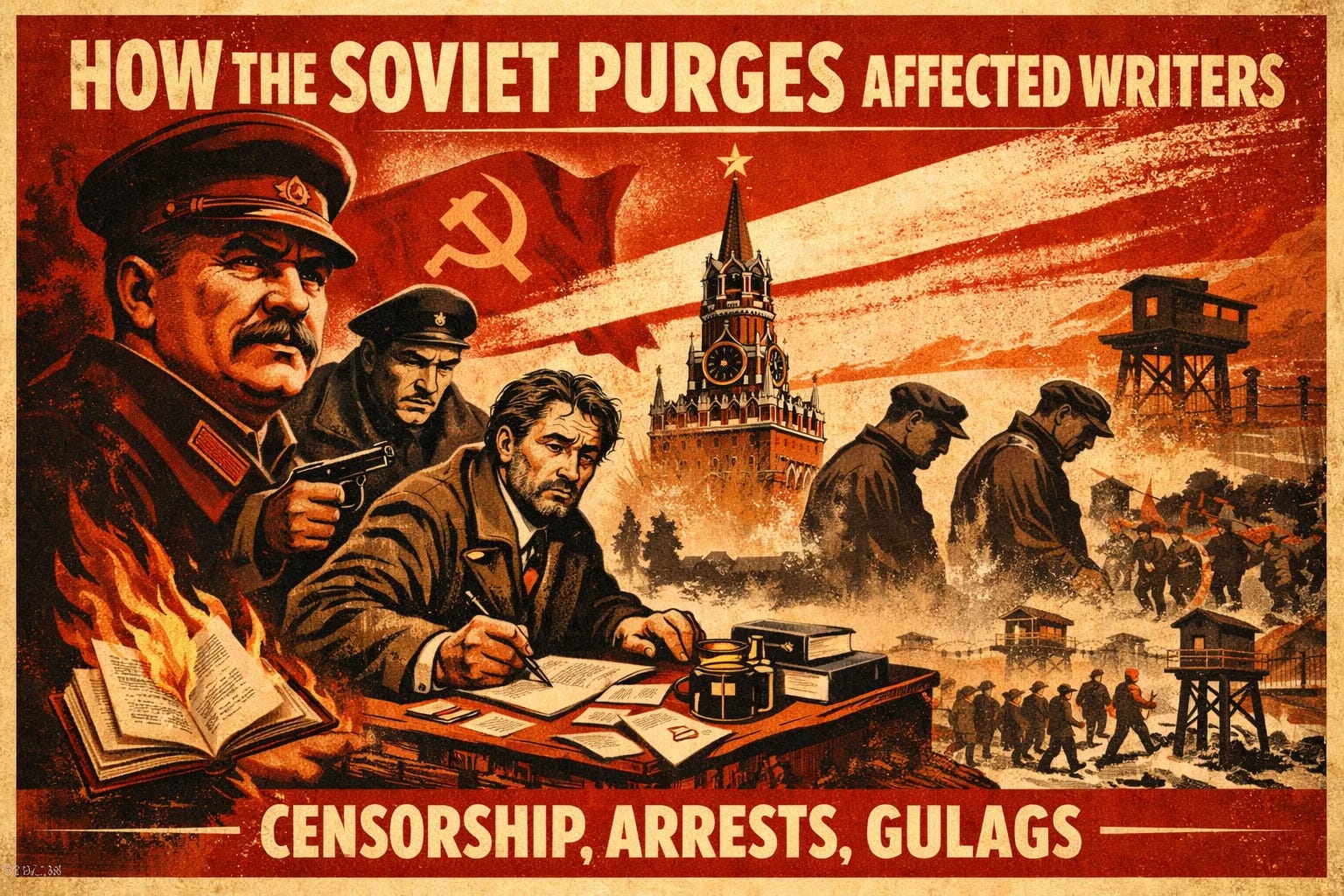
Now, you might be thinking: fine, but writers are clever. They’ll find ways around it. They’ll hide meaning in metaphor, disguise critique as fiction, and slip past the censors with subtlety.
And yes, some did. But here’s the catch. Cleverness is dangerous in a paranoid system. If your work is too straightforward, it’s propaganda and safe enough. If it’s too obscure and open to interpretation, it raises suspicion. What are you really saying? What are you trying to hide?
So you end up in a bizarre middle ground where writing has to be just clever enough to feel intelligent, but not so clever that it looks subversive. That’s a narrow lane to operate in.
And it produces a very specific kind of literature: polished, controlled, and fundamentally constrained.
The Disappearance of Literary Risk
Great writing involves risk. Not necessarily political risk, but intellectual risk. Emotional risk. The willingness to go somewhere uncertain, to explore uncomfortable territory, to say something that might not land well.
Under Stalin, that kind of risk became untenable. Not because writers suddenly lost their nerve, but because the cost-benefit calculation changed completely.
What do you gain from pushing boundaries? A more honest piece of work. A deeper exploration of reality. What do you risk? Arrest and execution. It’s not exactly a fair trade.
So risk disappears. Not entirely, but enough to flatten the landscape. Writers stick to what’s known and safe, what’s already been approved in some form. When that risk disappears, so does a huge chunk of what makes literature interesting. You don’t get breakthroughs. You get iterations.
Memory Gets Rewritten
One of the more insidious effects of the purges was what they did to cultural memory.
When writers are removed – killed, imprisoned, or simply erased from public life – their work often goes with them. Books disappear from circulation. Names are struck from records. References vanish. It’s not just censorship. It’s retroactive editing of reality. And that has a cascading effect.
New writers grow up without access to the full tradition that came before them. They inherit a distorted version of literary history, one that has been cleaned up, simplified, and aligned with the current ideology. They don’t just write under constraints. They think under them, because the past they’re building on has already been filtered.
The Illusion of Stability
From the outside, Soviet literature during this period can look oddly stable. There are publications and recognised authors. But it’s an illusion.
What you’re seeing is a controlled environment where variability has been reduced. The range of acceptable expression is narrow, so everything starts to look consistent. And consistency, in this case, is not a sign of health. It’s a sign of restriction.
Real literary cultures are messy and contradictory. Full of competing voices and clashing ideas. When that mess disappears, it’s not because everything has been resolved. It’s because most of it has been removed.
The Final Irony
The Soviet system produced an enormous amount of writing. Books, poems, essays, articles….an entire apparatus of literary production humming along, year after year.
On paper, it looked like a thriving culture. But much of it was built on the voices that weren’t there. On the ideas that had been cut out before they could take shape.
It’s like looking at a photograph where half the people have been carefully removed and then being told it’s a complete picture. Technically, something is there. But it’s not the whole story, and the missing parts are where the truth usually hides.
If you want a neat, comforting conclusion — something about the triumph of the human spirit or the inevitability of truth breaking through — you’re not going to get it.
What the Soviet purges show, more than anything else, is that systems can be very effective at shaping what gets said, what gets written, and what gets remembered. If that doesn’t make you at least a little uneasy about who’s shaping the narrative around you right now, you’re probably not paying attention.
For more on this subject, check out the article on my website.
Did you enjoy this article? Then help me write the next one by buying me a cup of tea!